



Are you concerned about the impact of AI on your current or future work in music? You’re not alone.
Whether it’s used to assist musicians in their work or replace them, AI promises to continue to revolutionize the world of music as it does pretty much every aspect of our lives. But what it will all look like down the road is ever-changing and hard to predict accurately.
We reached out to numerous college-level music schools, national music organizations, and millenial and Gen Z musicians to gain insight. The fact that a number of those contacted didn’t respond to our request for input may relate to how much is still unknown or possibly how reluctant folks are to make predictions in light of how fast AI is revolutionizing the world of music. Unsurprisingly, we learned how controversial AI is regarding composing, performing, producing and disseminating music.
What’s at risk?
Most of the sources we spoke with agreed that specific sectors of the music industry are more vulnerable to disruption and even being taken over by Al. When it comes to songwriting and composing, music that fills a need but doesn’t have to be authentic, creative, and emotionally realistic will be most impacted. This is music that’s considered “lower level.” It isn’t live, is devoid of passion and the human element, and doesn’t connect people to music on a deeper level. Instead it’s deemed to be budget conscious and “good enough” for the following:
– Background music, including social media and music to listen to while working or engaging in a variety of other activities
– Music for corporate videos, ads, podcasts including jingles used for advertising or branding
– Template-driven catalogue songs in common styles
– Some background vocal/instrumental music
AI is already replacing human involvement in the following roles within the music industry, with more displacement fast approaching:
– Lower profit, highly-repetitive work
– Tasks that don’t rely on the unique artistic voice but instead can be achieved via existing formulas and templates. This includes tedious aspects of being a music educator, leaving more time for supporting musicianship, motivating and mentoring students, and building confidence and connection (such as writing lesson summaries, drafting emails to students and parents, and organizing scheduling)
– Foley tasks (i.e., sound effects) for games, apps, low-budget films
– Some parts for session musicians
– Entry-level audio and postproduction work that works well with existing AI tools
– Tracking royalties and other backend aspects of music management
Tackling the challenges
Recognize that AI is here to stay in most areas of our lives. The ability to adapt to rapid changes in the music world resulting from AI is vital. Experiment with AI in a variety of ways to help you better prepare for what’s coming. Look for ways in which AI can facilitate your productivity and self-sufficiency.
Stay informed about how AI is licensed and regulated so it doesn’t encroach on your work, income, creative freedom, and other aspects of your life. Be aware of legal, copyright, ethical, cultural and environmental challenges and concerns presented by the presence and use of AI. Ongoing complications and struggles along all of these lines demand close attention.
If you’re preparing music for an audition, portfolio, release, or any other audience, know that there are tools that are pretty savvy in being able to detect AI-generated music. However, to date the input they generate may be false or misleading to some extent (known as AI hallucination) and that possibility should be taken into consideration.
If you’re in college or about to be, find people, presentations, and other ongoing opportunities to educate yourself and explore AI’s potential impact on your future plans.
Takeaways
The Strategic National Arts Alumni Project, SNAAP, gathered and analyzed input from alumni of college arts programs and reported in February 2026 that approximately half of respondents were using AI for drafting text, editing, brainstorming ideas, and researching. 48% found themselves to be more productive as a result.
However:
– 90% of respondants were skeptical about the quality or accuracy of AI-generated output
– 86% had privacy/security concerns about the use of AI in their work
– 83% were concerned about the environmental impact of AI use (AI uses significant amounts of electricity and water leading to higher carbon emissions and higher depletion of water for cooling its data centers)
– 72% had concerns that AI would “dilute their personal style, some or all parts of their job creativity, or the authenticity of their output”
Advances in AI are moving so fast that it’s hard to keep up. Even some of the research gathered recently for this article was already out of date before the article was completed and was therefore not included.
We expect changes driven by AI to continue accelerating, so stay alert to how it may reshape your area of interest and expertise by following reliable resources including those cited below. Pay attention to informed use of AI and how it can assist you. And figure out how you can use AI in your work without giving up on your authentic human voice in what you create.
By Barbra Weidlein, co-founder and director of MajoringInMusic.com
Resources to check out
Centering the Arts in the Age of AI
Why AI Makes Great Musicians More Valuable ( on RealMusic.AI)
AlgoRhythms: AI, Music, and Human-Centered Creativity
Thanks to these contributors to this article
Indiana University Jacobs School of Music, Alain Barker, Director, Music Entrepreneurship and Career Development
Eastman School of Music, Rachel Roberts, Former Director, Eastman School of Music Strategic Initiatives
SNAAP (Strategic National Arts Alumni Project )
University of South Carolina School of Music, Emily Schwitzgebel, Assistant Professor of Music and Artificial Intelligence
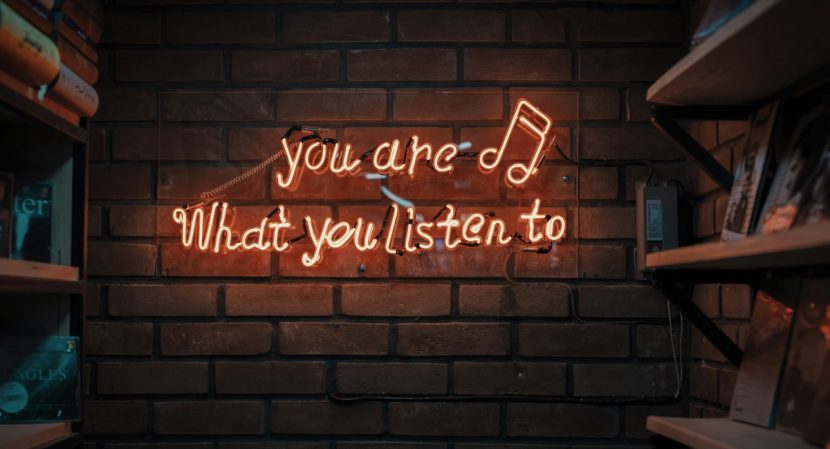
Photo credit:Mohammad Metri (Unsplash)


Liton
Yes! I am also concerned that Suno AI app where one can create music but can’t delete. Though there is an option to delete the created song but can’t delete it. So, I am very much worried about it.